Powering AI at Scale: Modular Dispatchable Solar for Data Centers
Exowatt
How Exowatt's modular dispatchable solar unlocks fast, reliable, clean firm power for AI data centers — off-grid and grid-connected — at competitive cost.
Contents


Executive Summary
AI-driven computing is accelerating data center growth faster than the grid can deliver new capacity. For most new data center campuses, the limiting factor is no longer land, fiber, or chips, but power. This shift is driving demand for solutions that can provide firm, reliable, and dispatchable power quickly, without waiting years for interconnection upgrades.
Dispatchable solar is a practical pathway to meet this need. Solar energy is inexpensive, but inherently intermittent. Exowatt converts low-cost solar into a dispatchable supply by storing energy as heat and delivering it when needed. Modular in design, Exowatt can be deployed as standardized building blocks that scale from tens of megawatts to gigawatts, enabling faster siting, construction, and replication across campuses. Deployed on-site, Exowatt can be built in advance of grid infrastructure timelines for accelerating project delivery while reducing reliance on fuel-based generation and exposure to price volatility.
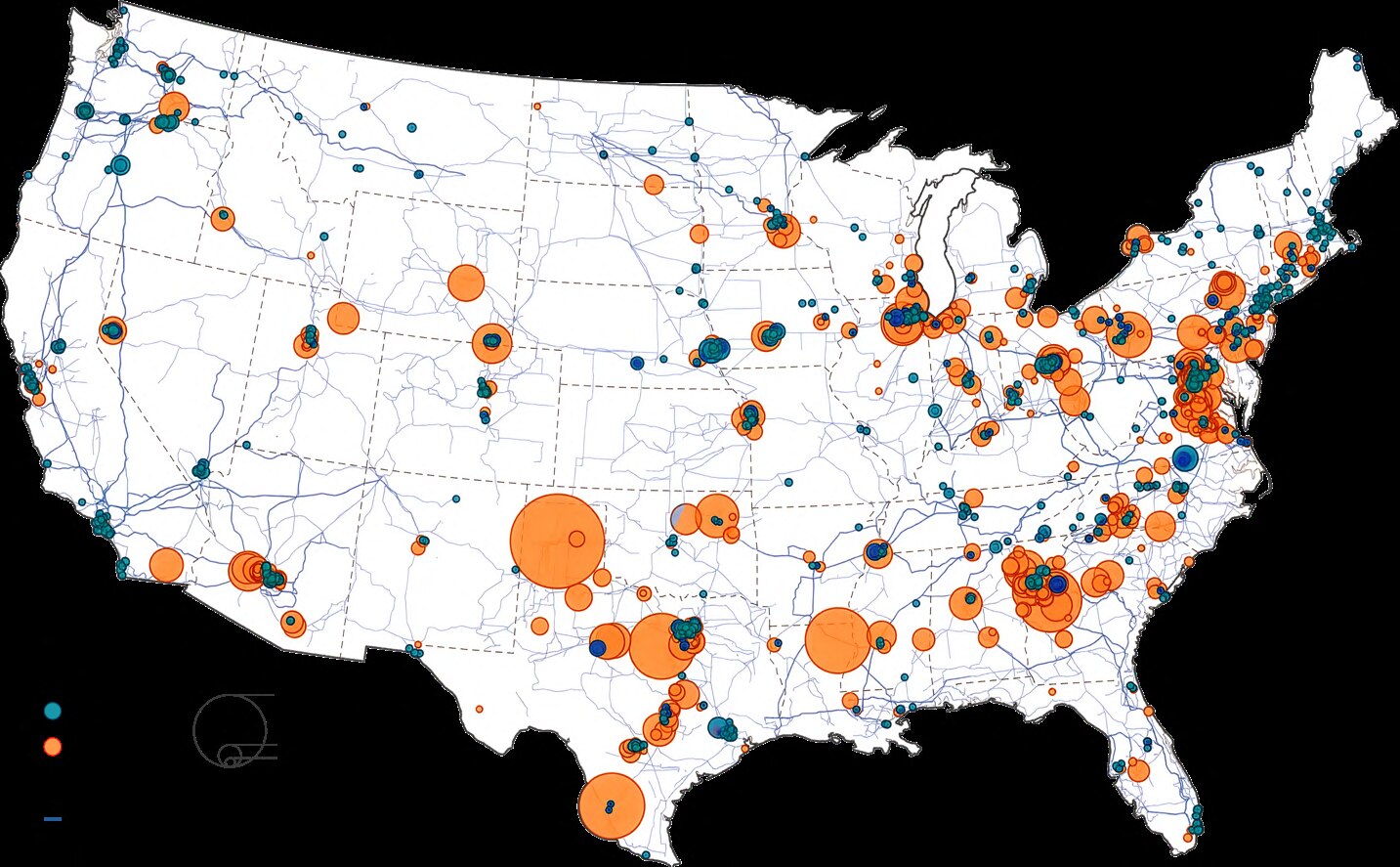
With Exowatt’s dispatchable solar modules, a new paradigm of reliable data center power supply is unlocked. Across the U.S. Southwest, vast tracts of inexpensive land with world-class solar resources yet poor grid and gas infrastructure remain underutilized. With Exowatt’s powered land solution, it’s estimated that more than 1,200 GW worth of sites suitable for AI data center capacity in the US Southwest[1] can be unlocked, expediting time to market at competitive costs.
This white paper presents the blueprint for Exowatt’s powered land solution. Reference configurations illustrate how the Exowatt solution can integrate into data center power systems, with both off-grid and grid-connected architectures. Across all scenarios, Exowatt provides renewable first solutions that reduce time to power, unlock more compute power by lowering fuel-based generation capacity and runtime, and effectively enable overnight utilization of low-cost solar resources for 10+ hours. Exowatt’s modular design delivers dispatchable solar power that is scalable, fast to deploy, reliable, clean, and firm power for data centers.
The Time to Power Bottleneck
Data centers are expanding faster than the grid can deliver new capacity. A study from Lawrence Berkeley Lab[2] projects that data center electricity demand could increase to represent 7-12% of U.S. total electricity demand by 2028, representing a Compound Annual Growth Rate (CAGR) of roughly 15-35%. For many new projects, the limiting factor is no longer land, fiber, or chips, but power availability on reasonable timelines. In response, much of today’s rapid deployment strategy has defaulted to on-site gas generation, often supplemented by diesel backup, because it is perceived as the most controllable way to secure capacity when interconnection timelines stretch for years. However, this approach is increasingly constrained by multi-year turbine and generator lead times that can reach six years[3], along with fuel infrastructure requirements, lack of firm gas availability, and environmental permitting limitations. These emission profiles can limit data center capacity and are increasingly drawing scrutiny from regulators and local communities[4]. Natural gas also exposes data center owners and tenants to fuel price volatility, while risking underutilization if projected demand and utilization profiles change.
Figure 1. Historical Levelized Cost of Electricity (LCOE) Comparison - adopted from Lazard LCOE report
Refer to Figure 1. Over the past 15 years, solar has emerged as the lowest-cost generation source. However, to expedite data center development, the intermittency of solar generation must be addressed by shifting cheap, abundant solar resources to the hours when the sun no longer shines. While traditional chemical batteries excel at short duration shifting of this energy, for a truly clean, firm, dispatchable solution, storage beyond 10+ hours is required. Scaling chemical batteries solutions to these duration requirements drives unviable costs, significant balance of system complexities, fire/safety/permitting risk, and limited redundancy capabilities. By employing cheap, abundant, safe thermal storage with near-zero degradation, Exowatt can affordably scale storage to eliminate the intermittency problems that continue to limit traditional solar and chemical battery deployments. Exowatt provides the first viable solution for data centers to run on clean, firm power.
[3] Wood Mackenzie 2025 Q3 US Data Center Pipeline
[4] Time, ‘We Are the Last of the Forgotten:’ Inside the Memphis Community Battling Elon Musk’s xAI,”
Figure 2. Clean Firm Power Comparison Matrix
Modular Design Enables Fast and Low-cost Scaling
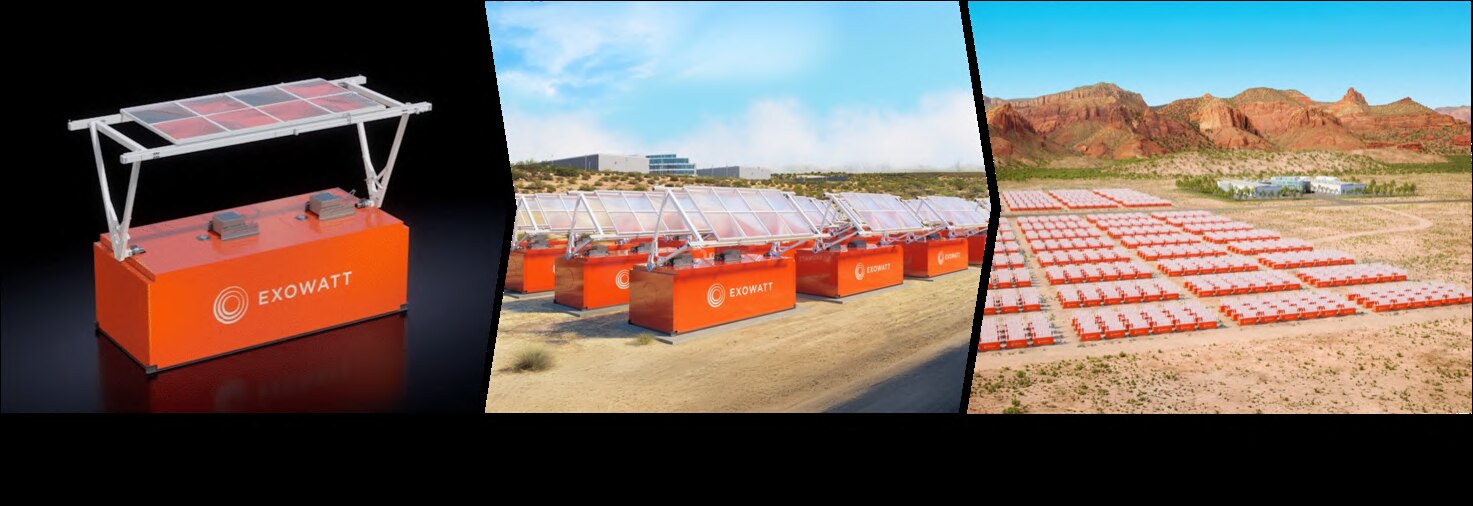
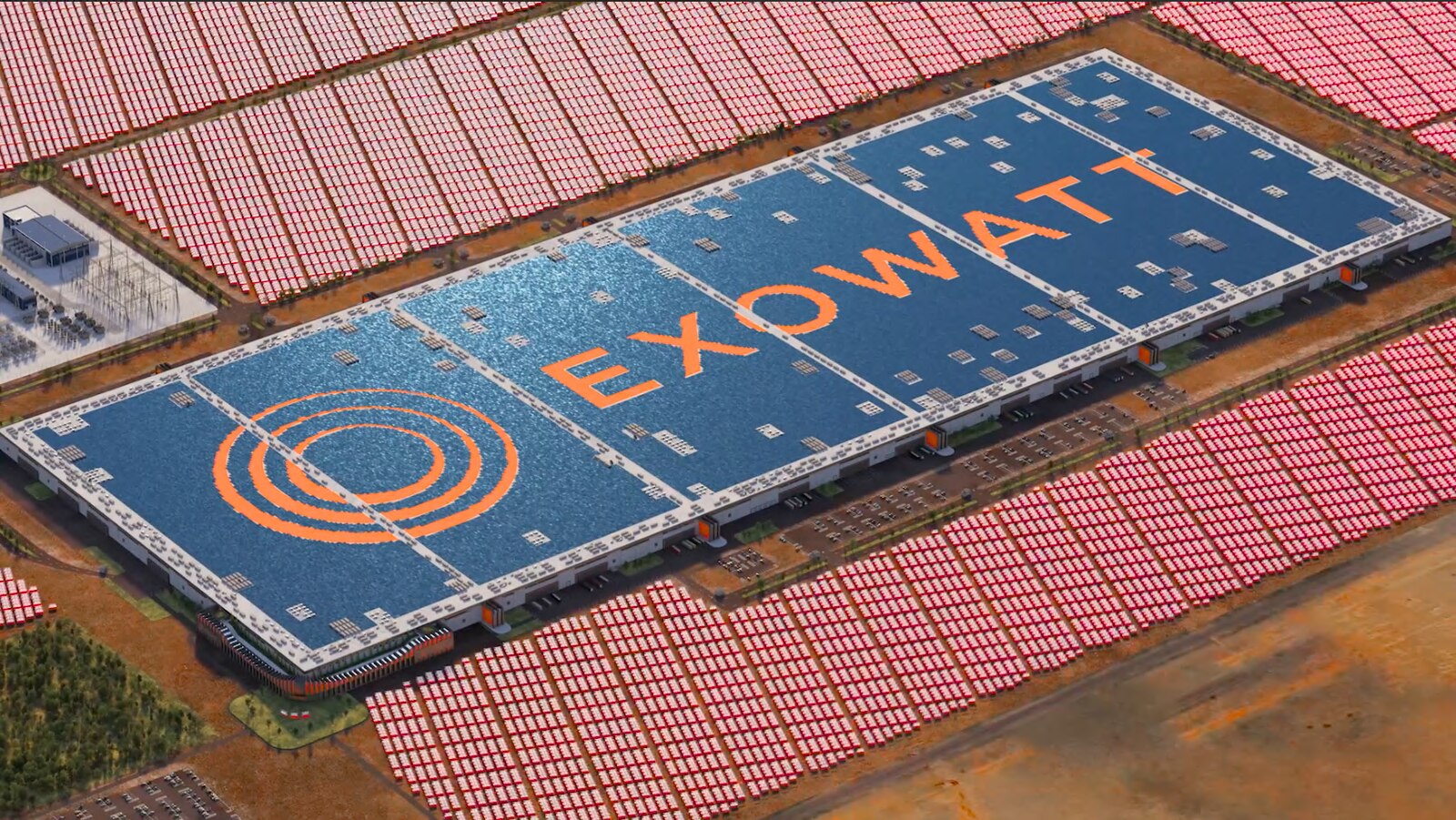
This illustration highlights how Exowatt’s modular architecture scales via simple replication. A single containerized module serves as the repeatable building block; additional modules are added in parallel to grow from tens of megawatts to gigawatts with a predictable layout, standardized electrical interface, and a consistent construction process. Building on the proven deployment model of containerized battery systems, Exowatt is factory-built to shorten timelines, reduce project risk, and simplify civil work and installation, while avoiding the fire risk that can complicate Authority Having Jurisdiction (AHJ) approval for large lithium-ion battery systems. The modular topology also improves resilience through redundancy: individual modules can be taken offline for planned or unplanned maintenance with limited impact on overall capacity.
On-site Generation As The Fastest Path to Clean
Firm Power
On-site dispatchable firm power represents the logical first step for addressing near term data center power constraints. By enabling on-site capacity to be deployed in parallel with or without grid interconnection, this approach significantly reduces time to power while preserving long term grid integration pathways. Dispatchable power can operate reliably today while ultimately providing value back to the grid through grid services, demand response, and/or energy export as grid interconnection capacity expands.
Although renewable energy is often the lowest-cost source of electricity, its intermittent nature limits its ability to serve the 24/7 firm load required for data center operations. Exowatt turns abundant solar into controllable, around-the-clock power by storing energy as heat and dispatching it when needed. This firming and shifting capability reduces reliance on fossil fuel-based generation, lowering both cost exposure and carbon emissions.
Figure 3. Time to power pathway for data centers
Ideal Siting in the US Southwest:
Where Land and Solar Align
Figure 4. Solar irradiance and population density map
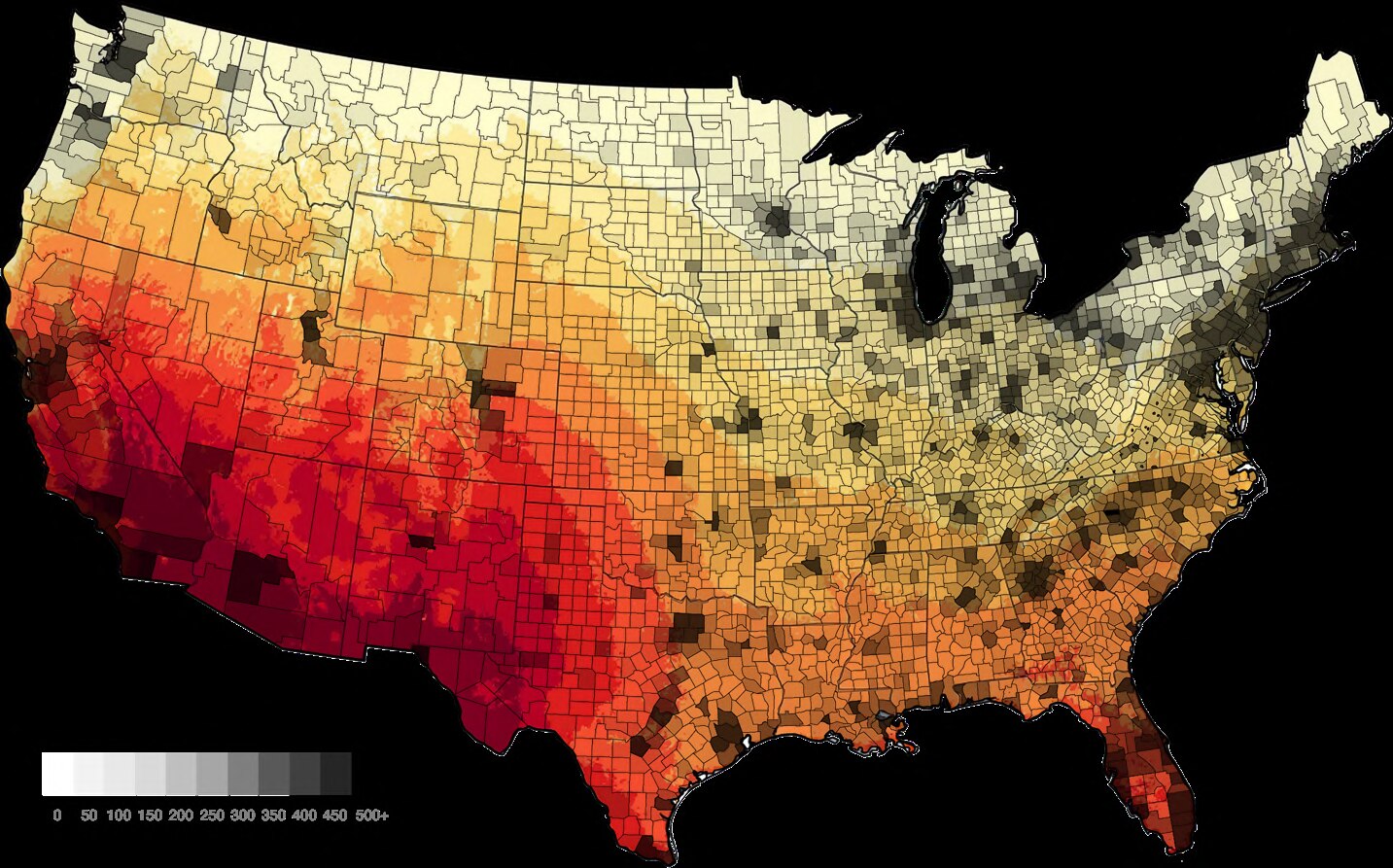
Figure 5. Operating and planned data center capacity and transmission line map
Exowatt Data Center Reference Architecture
To exemplify the flexibility and capability of dispatchable solar, Exowatt has developed a data center reference architecture to provide customers with a clear, integrated view of how Exowatt’s system can be deployed both off-grid and grid-connected. By consolidating technical, operational, and system-level considerations into a single framework, this reference architecture illustrates how Exowatt enables data center operators to achieve reliable, scalable, and cost-effective power solutions. By deploying this reference architecture, customers can optimize performance, maximize asset utilization, ensure high uptime, and minimize energy costs. All of this can be achieved without waiting 5+ years for new power.
Energy Generation Mix and Operating Profile
This white paper models a representative project with 100 MW of IT load and a 1.4 PUE, corresponding to a 140 MW peak facility load, located in Phoenix, Arizona, a major data center market with high DNI.
There is an increasing interest in off-grid solutions, although this introduces both engineering and operational complexity. Nevertheless, data center developers have begun planning mega campuses with off-grid configurations, signaling a lack of confidence that utilities will meet their development timelines for increasingly large loads. It is projected that 6.6 GW of microgrids will come online in 2027[5]. Most of those projects are identified as data center projects, such as Project Jupiter, Joule Power AI, and VoltaGrid.
In the absence of grid power, there are multiple ways to construct an off-grid system to deliver reliable power to a data center based on available resources. The most common on-site deployment is to install natural gas combustion turbines or engines (“CT/GEN”) to cover the full load. Beyond carbon emissions, on-site combustion can trigger criteria pollutant permitting constraints, limiting data centers’ computing power availability. Thus, this approach is deemed unsustainable from both cost and environmental perspectives.
To unlock the opportunity for data centers to scale power without being constrained by CT/GEN size and high utilization requirements, Exowatt provides a renewables-first, off-grid data center configuration. As seen in Figure 6, the annual generation profile utilizes Exowatt for the vast majority of a data center’s energy needs across the year, providing approximately 83% of total energy via low-cost, emissions-free solar, while the CT/GEN supplies the remainder. By combining solar generation and long-duration storage components into an integrated module, Exowatt can cover periods of low solar availability, categorically unlocking the potential for solar in a way BESS cannot. Seasonal dynamics reinforce this value: in summer months, Exowatt supplies nearly all site energy, while winter conditions increase the generator’s contribution modestly, with Exowatt covering roughly 69% of the load.
[6] Wood Mackenzie Q3 2025 US Data Center Pipeline
As a result, the required on-site fuel-based generation capacity is determined by the peak deficit rather than the full facility demand, with approximately 65 MW of CT/GEN capacity needed to meet the maximum shortfall (about 46% of the 140 MW load). This approach delivers reliability and enables off-grid deployment while substantially reducing gas turbine sizing, runtime, emissions, and fuel consumption compared to a fully fossil fuel-based design.
Figure 6. Annual generation and hourly profile of Exowatt and fuel-based generation (off-grid)
Exowatt can be integrated with existing on-site solar PV systems. In these cases, Exowatt can be sized to complement the existing PV capacity and the site’s available land footprint. Figure 7 shows that, with 280 MW of existing PV, both solar resources operate at approximately 72% capacity factor. Even at a reduced size, an 80 MW Exowatt system provides approximately 37% of the site demand (over 50% of the solar energy) as dispatchable firm capacity, forming the backbone of the energy system. The existing PV delivers daytime energy, while Exowatt firms that solar resource into a controllable, around-the-clock supply, materially reducing the capacity and runtime required from fuel-based generation. CT/GEN serves primarily as a seasonal reliability layer, operating mainly during winter and shoulder periods to cover residual deficits.
Figure 7. Annual generation profile of Exowatt, PV, and fuel-based generation (off-grid)
Figure 8. Hourly dispatch of Exowatt, PV, and fuel-based generation
As grid infrastructure and interconnection capacity become available, the same Exowatt system can transition from off-grid to grid-connected operation.
This configuration replaces the on-site CT/GEN with grid power as the primary power source alongside the Exowatt system. CT/GEN will serve as a backup power only. The annual generation profile shows that Exowatt supplies the vast majority of a data center’s energy needs across the year, providing approximately 83% of total capacity while the grid supplies the remainder. Overall, the Exowatt system can accelerate interconnection by cutting the required grid import capacity by roughly 54% versus a full 140 MW load. With excess capacity from the on-site CT/GEN, it can be utilized as a grid asset to provide capacity during grid stress periods, especially in the summer months. This aligns with emerging industry solutions for flexible interconnection and Bring-Your-Own-Capacity (BYOC)[7].
Figure 9. Annual generation profile of the grid-connected configuration
Table 4. Project Configuration Summary
| System configuration | Exowatt | PV | CT/GEN | Grid | Avoided CO2 Emissions* |
|---|---|---|---|---|---|
| Off-grid | |||||
| Exowatt + CT/GEN | 140 MW | - | 65 MW | - | 580,000 MT CO2/year |
| Exowatt + PV + CT/GEN | 80 MW | 280 MW | 76 MW | - | 505,000 MT CO2/year |
| Grid-connected | |||||
| Exowatt + Grid | 140 MW | - | - | 65 MW | 580,000 MT CO2/year |
Note:
- These reference configurations are intended to illustrate energy generation mix and operating profiles. They are not intended to represent a complete Tier III/IV power architecture (e.g., N+1 redundancy, full standby coverage, or maintenance bypass). Customers may elect to install additional standby CT/genset capacity up to the full facility load based on reliability targets and operational risk posture.
- These reference configurations represent optimized outcomes under the modeled assumptions and constraints and are intended to illustrate representative system mixes. Actual project sizing may vary based on site conditions, interconnection availability, load profile, and customer reliability and cost objectives.
Power Systems Architecture
Exowatt’s data center power architecture is built around a simple idea: a standardized, modular generation platform combined with modular redundancy. Exowatt modules are deployed as repeatable 2 MW building blocks, grouped into sub-blocks via power-electronics interfaces that provide control, protection, and dispatch across AC and DC connections. Each 2 MW block can operate grid tied, provide grid forming support for critical loads, or deliver high voltage DC to data center assets, with an integrated energy buffer (supercapacitors or batteries) for fast response and ancillary services.
Modular topology improves resilience by design. Scaling from MW to GW through many 2 MW building blocks reduces meaningful single points of failure and supports planned or unplanned maintenance with minimal loss of available capacity. Compared to centralized inverter architectures typical of large grid-scale solar and storage, the system operates seamlessly, rather than experiencing step change losses when individual components are taken offline.
The same modular foundation preserves optionality as projects evolve. Exowatt is designed to integrate seamlessly with utility supply and additional distributed energy resources since its power electronics interfaces can interact with external voltage sources and coordinate dispatch across resources. Dispatch can also be optimized proactively when solar conditions are forecasted to deviate from expected contribution. In addition, as data centers increasingly explore direct current architectures, many face challenges integrating native DC renewable generation into DC infrastructure; Exowatt’s AC and DC capable interfaces, including an 800 V DC delivery option, provide a pathway to serve DC loads more directly and reduce conversion losses.
In practice, Exowatt can serve as both a primary power resource and a dispatchable reserve, giving operators a level of control over a clean energy profile that is difficult to achieve with conventional renewables. As a result, customers can reduce the type and quantity of standby resources needed while preserving reliability, directly supporting the two dominant requirements for modern data centers: faster time to power and high uptime.
Figure 10. Exowatt’s Power System Architecture
Fast, Reliable, Clean Firm Power at Scale: A
Modular Architecture Built for Data Centers
Exowatt delivers clean firm power on data center timelines for both grid-connected and off-grid deployments, enabling four core outcomes:
- Reduce time to power: on-site deployment to bring capacity online faster than grid expansion and interconnection upgrades
- Unlock more compute power by minimizing combustion generation: Provide dispatchable firm capacity that reduces the required size and runtime of on-site fossil fuel-based resources
- Firm low-cost solar: Shift abundant daytime solar to all hours of the day using low-cost, abundant thermal storage.
- Built from standardized 2 MW blocks that aggregate to GW scale: Exowatt’s modular, redundant architecture improves resilience by reducing single points of failure and enabling planned or unplanned maintenance without materially derating capacity, providing a practical pathway to fast, reliable, zero-carbon power for the next generation of AI and hyperscale data centers.